
How Often It’s Needed
A kitchen remodel looks great on day one, but the real question is what happens after the first spills, the daily cooking, and the seasonal changes around Frisco, TX. This guide breaks down a practical maintenance rhythm so your kitchen stays clean, functional, and visually consistent.
If your kitchen was recently updated, you may be wondering whether routine care is “worth it” or if maintenance can wait until something looks wrong. Maybe you have noticed cabinet doors that do not close as smoothly as they used to, caulk joints that look slightly tired, or a countertop finish that does not wipe clean the same way.
In Frisco, TX, kitchens also experience real-world wear from day-to-day cooking, humidity swings, and frequent foot traffic. This guide helps you understand what to maintain, how often to check it, and when maintenance turns into a repair or a kitchen renovation refresh.
- Quick answer
- What to check first
- Main things customers should understand
- Why this matters in Frisco, TX
- Common mistakes to avoid
- Customer checklist
- Frequently asked questions
Quick Answer
Most kitchen renovation maintenance should be checked on a simple schedule: do quick wipe-downs and hardware checks weekly, inspect joints, caulk, and grout monthly, and plan deeper care seasonally. The goal is to catch small issues early, especially around water exposure points like sinks, backsplashes, and under-cabinet areas. If you start seeing persistent stains, soft spots, loose cabinet alignment, or recurring leaks, maintenance is no longer enough and you likely need targeted repairs. A practical recommendation is to keep a short checklist for each season and address small fixes before they expand into a larger kitchen renovation cost.
What to Check First
Start with the areas that see the most moisture and movement. In most remodeled kitchens, problems begin at transitions: where the countertop meets the backsplash, where caulk lines meet tile or stone, and around plumbing penetrations under the sink. Then move to the “mechanics” you touch every day: cabinet hinges, drawer slides, and the way doors align. If hardware is misaligned, it can stress doors and finishes over time.
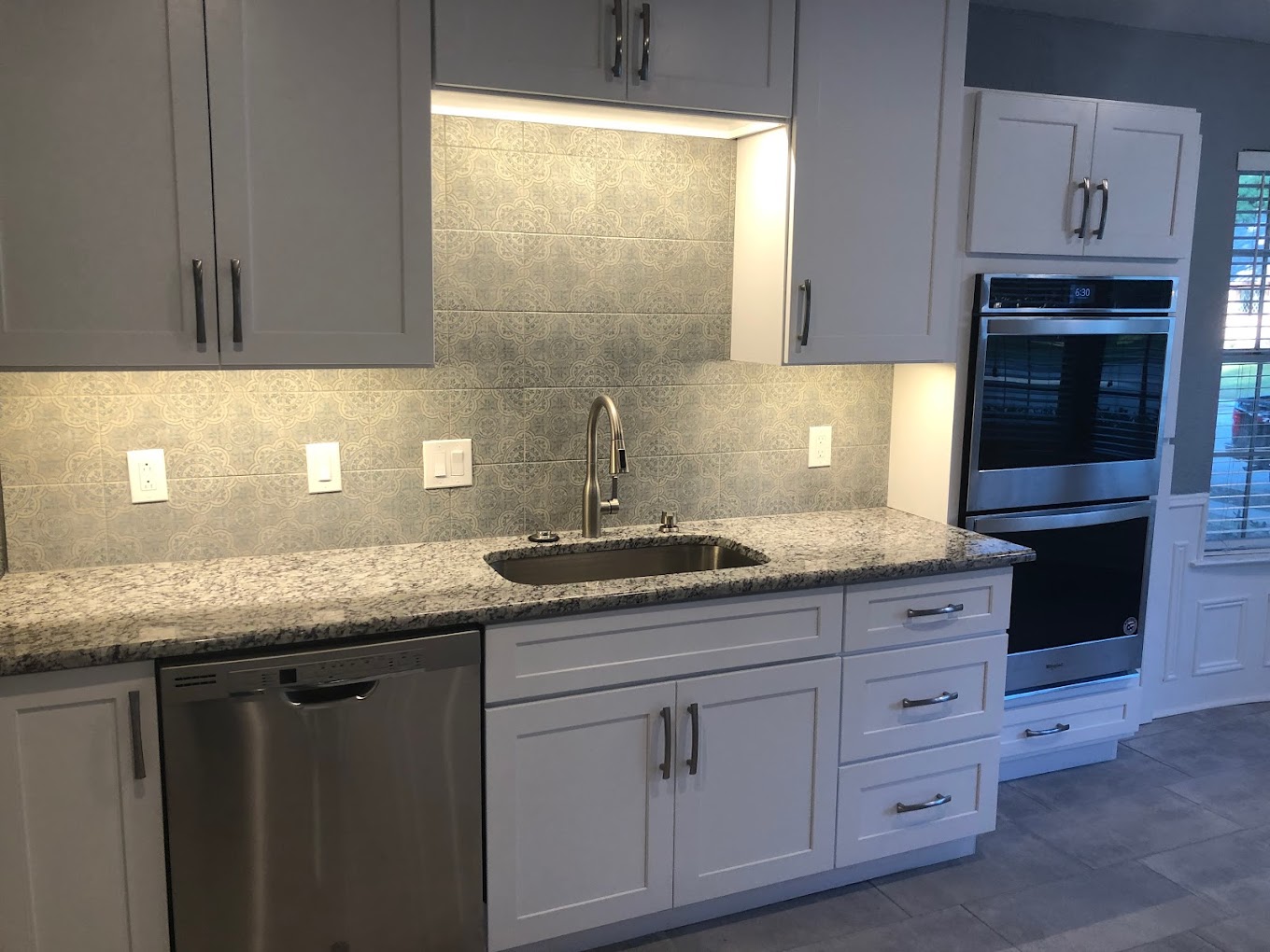
Next, look at the surfaces that hide early damage. Check grout lines for consistent color and tightness, inspect for lifting or cracking at flooring seams, and confirm that countertop edges do not show chips or separation. This first pass usually tells you whether you can handle maintenance now or should plan a repair-focused visit with a home remodeling contractor.
Professional observation: In kitchen renovations, the most common “small” issues tend to be invisible until they soak in. Consistent checks around the sink, dishwasher area, and backsplash edges help you prevent water from reaching materials that do not bounce back easily.
Main Things Customers Should Understand
Maintenance frequency depends on what you installed during your remodel. A custom kitchen remodel with natural stone, a full backsplash installation, and new flooring installation will need a different rhythm than a simpler update focused on kitchen cabinet replacement and countertop installation. Still, the underlying maintenance drivers are the same: water exposure, daily use, and how well the kitchen was sealed and aligned at installation.
| Kitchen area or component | How often to check | What you’re looking for | When it’s time to escalate |
|---|---|---|---|
| Sink, faucet, and plumbing access points | Weekly visual check + monthly deeper look | Drips, moisture under the sink, cabinet swelling, slow drains | Recurring leaks, persistent dampness, soft cabinet areas |
| Caulk lines at countertop edges and backsplash junctions | Monthly inspection | Cracks, gaps, discoloration, pulling away from surfaces | Water staining, recurring gaps, caulk separating repeatedly |
| Backsplash and bathroom tile–style grout lines (kitchen grout still matters) | Monthly to seasonal | Loose grout, uneven color, flaking tile edges | Tiles lifting, grout crumbling, active water intrusion |
| Cabinet doors, hinges, and drawer slides | Weekly quick test + seasonal alignment check | Misalignment, rubbing, squeaks, uneven spacing | Doors not seating, repeated “adjustments” that don’t hold |
| Kitchen flooring seams and transitions | Monthly check, plus after spills | Gaps at seams, lifting edges, swelling near wet zones | Persistent lifting, swelling that spreads, damage that won’t dry out |
| Countertops (including custom countertops and installation edges) | Weekly wipe-down + seasonal inspection | Chips, dull spots, hairline cracks, water-darkened edges | Cracks that widen, edge separation, stains that keep returning |
For homeowners planning a kitchen renovation refresh, this is also where you can decide whether you need routine touch-ups or a bigger change like kitchen cabinet installation, kitchen cabinet replacement, or a broader interior renovation. If you are also considering other spaces, you may want to compare how maintenance needs differ across rooms by reviewing kitchen renovation examples and then deciding what matches your priorities.
Why This Matters in Frisco, TX
Frisco kitchens see everyday wear, but they also tend to face seasonal shifts that can affect materials. Temperature and humidity changes can make wood components expand and contract slightly, which is why cabinet alignment checks seasonally are often more useful than only doing them once a year. Water exposure points are also high priority because small leaks can be harder to spot until they affect adjacent cabinetry or flooring.
Another local factor is how kitchens are used in real homes. Families often cook more at home, entertain guests, and move between kitchen and dining spaces throughout the day. That means drawer slides, door hinges, and countertop edges get used heavily. A simple maintenance rhythm can help your kitchen stay “tight” and aligned, which is especially noticeable with modern kitchen remodel finishes and open concept renovation layouts.
If you are balancing kitchen upkeep with other updates, it can help to keep your whole plan consistent. Many homeowners coordinate their kitchen renovation maintenance with related work like bathroom renovations, including bathroom remodel examples that show how sealing and moisture control are handled in wet areas.
Need a maintenance plan for your kitchen remodel?
If you want a clear, practical checklist tailored to what you installed, Red River Renovations can help you map the right inspection rhythm for your kitchen in Frisco, TX.
Talk to Red River RenovationsCommon Mistakes to Avoid
Homeowners usually do maintenance with good intentions, but a few patterns can make issues worse. One common mistake is waiting until a problem is obvious, like a water stain on a cabinet side, before inspecting caulk, grout, and plumbing access areas. Another is using harsh cleaning practices on finishes that were chosen for a specific look, which can lead to dullness or accelerated wear around edges.
Another mistake is focusing only on the “visible” surface and skipping the transitions. For example, a backsplash can look fine while the caulk line behind it or at the countertop junction is failing. Likewise, cabinet doors can look aligned at first, but worn hinge points or drawer slide issues can slowly stress the cabinet box over time.
Finally, many people assume that a repair will last forever without follow-up. If alignment keeps drifting or a joint keeps opening, it is a signal that something in the installation environment or sealing system needs attention. That is when targeted home renovation services are more effective than repeated touch-ups.
Customer Checklist
Use this checklist to set a realistic maintenance routine for your kitchen renovation. It is designed to help you catch small issues early, so you can protect your investment and avoid larger kitchen renovation cost surprises later.
- Weekly: wipe countertops and backsplashes using methods that match your surface type, then check for moisture around the sink area.
- Weekly: open and close cabinet doors and drawers to feel for rubbing, loose hinges, or slow slides.
- Monthly: inspect caulk lines at countertop edges and backsplash junctions for cracks, gaps, or discoloration.
- Monthly: check grout lines and tile edges for flaking, gaps, or uneven color that suggests water movement.
- After any spill: dry the area promptly and verify that flooring seams and cabinet bottoms are not absorbing moisture.
- Seasonally: re-check cabinet alignment and hardware tightness, especially if you notice doors that no longer “seat” correctly.
- Seasonally: inspect countertop edges for chips or separation and review under-sink areas for persistent dampness.
A representative Frisco homeowner scenario
After a kitchen renovation, a Frisco homeowner noticed small gaps along the backsplash edge near the countertop. At first, it seemed cosmetic, so they cleaned the area and waited. Over the next few months, the caulk line started to pull away again, and the grout nearby darkened slightly after heavy cooking days. Instead of repeatedly patching, they focused on the root area: sealing transitions and checking moisture exposure points around the sink and plumbing connections. That approach reduced recurring gaps and kept the kitchen looking consistent.
If you are making decisions about kitchen renovation ideas, this scenario is a good reminder that maintenance is most effective when it targets the transitions where water and movement meet.
Frequently Asked Questions
How often should I inspect caulk and grout after a kitchen renovation?
For most kitchens, a monthly visual check works well, especially for caulk lines at countertop edges and backsplash junctions. Grout checks can be monthly to seasonal depending on how often you cook and how much water splash you get near the sink and range area. If you notice discoloration, cracking, or gaps forming, inspect sooner and address the issue promptly. Early attention helps prevent moisture from reaching the layers behind surfaces, which is where repairs usually become more involved.
What maintenance should I do weekly to keep my kitchen looking new?
Weekly maintenance is mostly about preventing buildup and catching early warning signs. Wipe countertops and backsplash surfaces in a way that matches your material. Then do a quick “feel check” by opening and closing cabinet doors and drawers to confirm smooth operation. Finally, take a moment to look under the sink and around the dishwasher area for any moisture or drips. These small habits often help you avoid bigger kitchen renovation cost issues.
When does maintenance turn into a repair or kitchen renovation refresh?
Maintenance turns into a repair when the same problem keeps returning. For example, if caulk cracks again after a fresh touch-up, there may be an ongoing moisture issue or a sealing mismatch at the transition. If drawer slides keep loosening or cabinet doors drift out of alignment repeatedly, the hardware or mounting may need attention. If you see persistent stains, soft spots, or lifting flooring seams that do not improve after drying, that is a sign to get a targeted assessment rather than continuing surface-only fixes.
Is kitchen maintenance different if I had custom countertops or flooring installation?
Yes. Custom countertops and new flooring often require maintenance that fits the specific material and installation details. The key difference is where you inspect: countertop edges, seams, and transitions matter more when the material has delicate finishes or visible junctions. Flooring also needs attention at seams, especially near wet zones. The best approach is to follow a routine that includes seasonal inspection of edges and transitions, not just cleaning. If you are unsure, reviewing your installation details with a home remodeling contractor can help you set the right care expectations.
Can Red River Renovations help with larger kitchen remodel decisions beyond maintenance?
Yes. Maintenance helps you protect what is already installed, but some homeowners decide to move toward a more complete update. Red River Renovations supports kitchen remodeling contractors work such as kitchen cabinet installation, kitchen cabinet replacement, countertop installation, backsplash installation, flooring installation, and related interior renovation. If your kitchen needs broader changes like an open concept renovation or additional storage, it helps to review a few project examples and then discuss what “next step” makes sense for your goals.
Get a kitchen maintenance check tailored to your remodel
Whether you are planning a small kitchen remodel or protecting a full remodel, Red River Renovations helps homeowners in Frisco, TX stay ahead of common wear points in kitchen renovation maintenance.
(214) 492-9480
About Red River Renovations
Red River Renovations provides home remodeling services in Frisco, TX and surrounding areas. Our work includes kitchen renovation and kitchen remodeling, bathroom remodel and bathroom renovations, and related interior remodeling projects. If you are planning a kitchen renovation, updating cabinetry, or coordinating broader home improvement contractors needs, you can explore our portfolio or learn more about our process on the about page.
For questions or to discuss your kitchen renovation maintenance plan, visit our contact page.
